You Don't Need an Hour at the Gym. You Might Only Need Minutes.
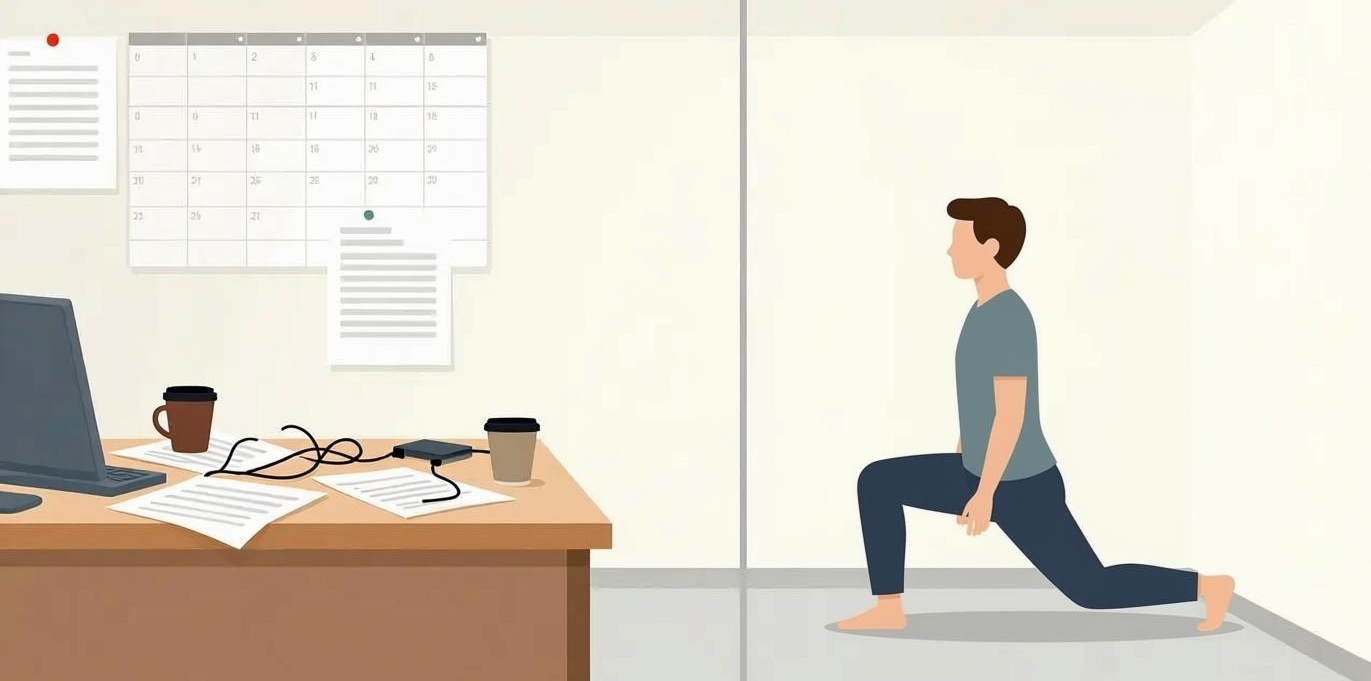
"I don't have time" is one of the most common reasons people give for not strength training. I totally get that. Life is full of obligations, and on top of that, it's throwing 100 mph curveballs at you. Saying "just make the time" is easier said than done, and honestly, not helpful advice at all. I understand there are people out there truly in a season of life where they cannot carve out 30-plus minutes for themselves to exercise. I get it. I've been there.
That's exactly why this post matters to me. There's a false belief floating around that a workout has to be a long, grueling session that eats up a chunk of your day. I'm happy to report that isn't the case.
My solution here will never be "just make time" while dismissing everything else going on in your life. For one, I'm not living your life. I don't know what it's like, and I'm not going to pretend I do. What I am going to encourage you to do is stop treating a time constraint as a reason to do nothing and start treating it as a limitation you can design your training around.
A 2022 review in Sports Medicine asked exactly that question: what's the minimum effective dose of resistance training, and does shrinking a program down to fit a busy life still produce real results [1]? The short answer is yes, with real evidence behind it, not just a motivational claim.
The Surprising Priority: Strength Over Size
The review makes a case for prioritizing strength and power over chasing muscle size. As we age, declines in strength and power happen up to eight times faster than the loss of muscle mass itself [1]. Strength is also more strongly tied to functional independence and health outcomes than muscle size is [2]. If your time is limited, that's genuinely useful to know. It means preserving your strength doesn't require the long, drawn-out gym session you're picturing. It can be its own bite-sized thing, built around what you actually have time for.
Two Small Options. Big Results.
The review identifies two distinct minimal-dose approaches, and they work through different mechanisms [1]:
- Low-volume, high-load training. Fewer sets, heavier weight, performed less frequently. Think one or two hard sets of a few key exercises, a couple of times a week, rather than a long circuit.
- Resistance "exercise snacking." Short, frequent bouts using minimal or no equipment, spread across your day rather than concentrated into one session. This might mean a set of bodyweight squats before lunch and another before dinner, rather than a dedicated 45-minute block. If you want to skip the planning entirely, I built a tool that hands you a random 60-second move whenever you need one, no thinking required. Try the Exercise Snack Generator →
Both approaches showed real improvements in strength and functional ability in the studies reviewed, in both younger and older adults [1]. Neither is a placeholder until you have more time. They're legitimate strategies!
The Real Reason This Works: You'll Actually Keep Doing It
Minimal-dose training may not just be more time-efficient, it may also be more sustainable. The review notes that higher training volumes are associated with more discomfort and lower enjoyment, both of which predict people quitting [1]. A smaller, more tolerable dose you'll actually keep doing for months beats an ambitious program you abandon in three weeks. Consistency has more research behind it as the deciding factor here than program sophistication does.
Try This: Pick Your Model
If you have 15 minutes, twice a week: Choose 3 to 4 exercises covering major muscle groups. Do 1 to 2 sets of each, working hard enough that the last couple reps feel genuinely difficult. That's the low-volume, high-load model, condensed but not diluted.
If you can't find even 15 uninterrupted minutes: Try exercise snacking. Pick 2 to 3 bodyweight movements, like squats, push-ups, or a wall sit, and do a short set of each a few times throughout your day. No equipment, no dedicated block of time required. Or just tap the Exercise Snack Generator and let it pick for you.
If your biggest constraint right now is time, a small, well-designed program still gets you real results. It's not a placeholder to survive until "real" training becomes possible. It's a legitimate way to train to improve your health. Sure, adding additional time and volume to your exercise program can add even more benefits, if you have the capacity for it, but never let perfection be the enemy of good!
References
- Fyfe JJ, Hamilton DL, Daly RM. Minimal-dose resistance training for improving muscle mass, strength, and function: a narrative review of current evidence and practical considerations. Sports Med. 2022;52(3):463-479.
- Kim YH, Kim KI, Paik NJ, Kim KW, Jang HC, Lim JY. Muscle strength: a better index of low physical performance than muscle mass in older adults. Geriatr Gerontol Int. 2016;16(5):577-585.
Want more evidence-based tools like this?