I Do Circus. My Hair and Nails Should Be Wrecked. Here's Why They Aren't.
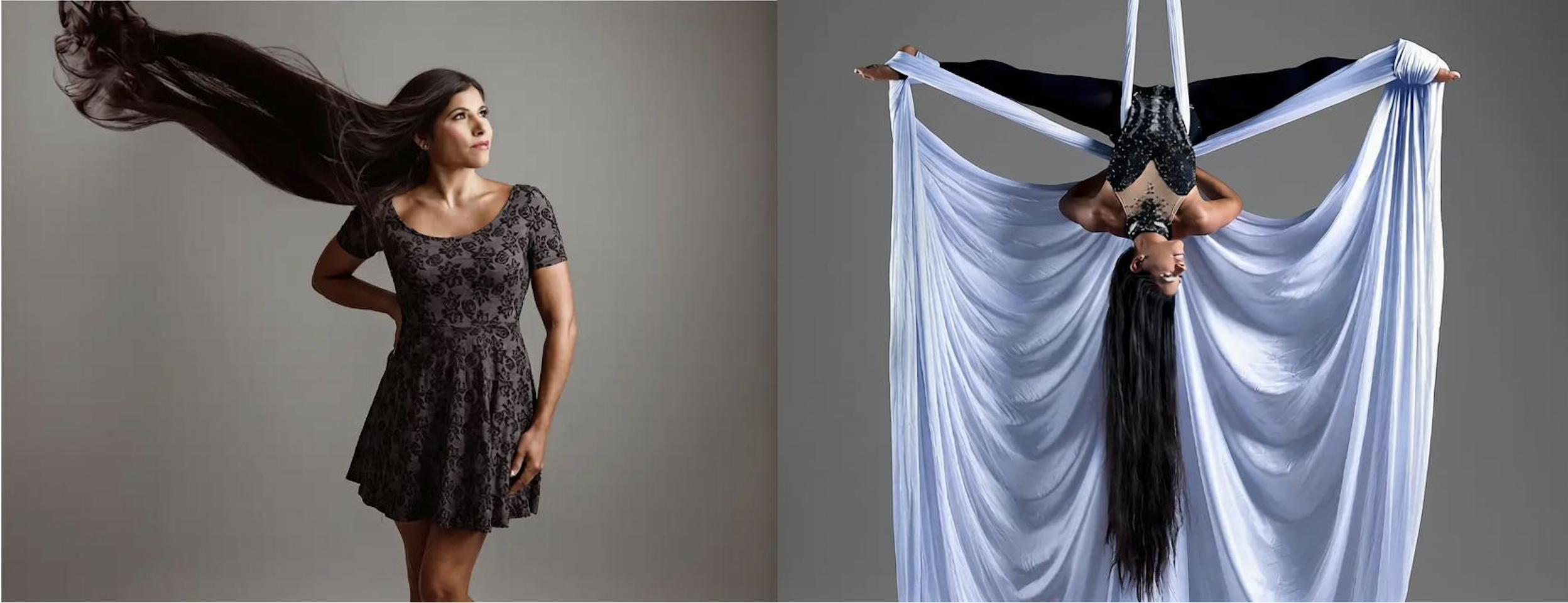
In any given week, my hair spends hours slicked into a tight bun, spinning, inverting, getting yanked on by apparatus, sweated through, and redone the next day. My hands are gripping, chalking, catching, and twisting on that same apparatus, which means my nails take a beating that would destroy most manicures.
I don't wear protective braids. I don't douse my hair in expensive oils or masks. I don't use gel or acrylic on my nails, just nature-based polish on my actual nails.
Despite this, my hair and nails are healthy, long, and strong.
So how do I pull this off? The answer has almost nothing to do with what I put on them. It's about what I put in my body. I am consistently giving my body enough protein so it can afford to invest in structures it considers optional.
After all, your hair and nails are just different forms of protein created by the body.
Hair and Nails are Built from the Same Thing
Hair and nails are both made almost entirely from keratin, a protein your body assembles from amino acids delivered through your bloodstream, sourced from what you eat.
Not expensive oils, shampoos, or serums. Amino acids.
Your body just builds that same raw material into two very different structures. Hair has fewer of the sulfur bonds that give nails their rigidity [1][2]. That's what lets hair bend and stretch without snapping, but it's also why hair is more sensitive to nutrient drops.
When protein or overall nutrition falls short, hair follicles notice first. Growth slows, follicles shift into a resting phase, and shedding shows up weeks to months later, a pattern called telogen effluvium [3][4]. That's why crash diets, illness, or periods of restriction often show up as noticeable hair loss months down the line. The shedding now was decided by what your body was going through a season ago.
Nails, on the other hand, are built tougher. They have more of those sulfur cross-links, which act like molecular cross-bracing [1][2]. That's what makes nails harder and more damage-resistant; they're designed to take hits.
And like hair, nails grow from tissue you can't see: the nail matrix, tucked under your cuticle. By the time material reaches the part you can paint, it's already finished, hardened keratin. Polish, base coats, and cuticle oil all work on nail that already exists. None of it reaches the matrix [1][2].
The short version: Both hair and nails are grown from the inside out, using whatever raw material your diet supplies.
Your Body Makes a Choice
Here's the part that matters most: hair and nails aren't keeping you alive the way your heart, brain, or immune system are. So, when nutrition runs short, available amino acids go to essential systems first. Hair and nail production get deprioritized [3]. Growth slows. Hair and nails weaken.
The takeaway: if you're under-fueling protein, your hair and nails will be among the first things to show it. No amount of cuticle oil fixes that.
The Key to Hair and Nail Health
Eat enough protein. Your body builds hair and nails out of amino acids from your diet, and it only invests in them when it has enough to go around. Protein is the main player for hair and nail growth, not the shelf of products in your bathroom.
Worth being precise about one thing: the goal is enough, not maximum protein. Correcting a real deficiency helps [3], but there's no good evidence that pushing well past adequate intake grows better hair [3][5]. Eating above the recommended protein requirement appears to be safe for healthy people [6]; it just isn't a proven hair growth strategy.
It is my own experience that eating a diet adequate in protein really helps keep my hair and nails strong. I'm also aware that genetics, hormones, age, and luck are in the mix too. However, evidence does support that if you're under-fueling, your hair and nails will show it [3].
Topicals help too; they're just doing a different job. Good conditioner, protective styles, and cuticle oil protect hair and nails that already exist. That's real, just limited. I use this jojoba oil on my hair ends, skin, and cuticles. It's inexpensive, organic, and structurally the closest plant oil to human sebum (technically a wax ester, which is why it absorbs readily instead of sitting on top) [7]. I use it to protect what's already there, not because I think it grows anything.
Feed it first, protect it second. If you're not sure what "enough protein" looks like for you, that's exactly what my protein calculator is for.
The Bottom Line
- Hair and nails grow from the inside out, built from amino acids in your diet
- Nails are built tougher than hair on purpose, using sulfur bonds that act like cross-bracing
- Your body prioritizes where protein goes: essential systems first, hair and nails second
- If you're under-fueling, hair and nails are the first to show it
- Eating enough protein is what helps most; topicals protect what already exists
- One topical worth using: jojoba oil (closest to human sebum) [7]
- Not sure what "enough protein" looks like? Use my protein calculator
This post contains an affiliate link. If you purchase through it, I may earn a small commission at no extra cost to you. I only recommend products I actually use.
References
- Nails. In: Clinical Methods: The History, Physical, and Laboratory Examinations, 3rd edition. NCBI Bookshelf, National Institutes of Health. NBK211.
- Histology, Nail. In: StatPearls. NCBI Bookshelf, National Institutes of Health. NBK539733.
- Guo EL, Katta R. Diet and hair loss: effects of nutrient deficiency and supplement use. Dermatology Practical & Conceptual. 2017;7(1):1. doi:10.5826/dpc.0701a01
- Hughes EC, Syed HA, Saleh D. Telogen Effluvium. In: StatPearls. NCBI Bookshelf, National Institutes of Health.
- Gomes N, Silva N, Teixeira B. Assessing the relationship between dietary factors and hair health: a systematic review. 2026. doi:10.1177/02601060251367206
- Antonio J, Ellerbroek A, Silver T, Vargas L, Tamayo A, Buehn R, Peacock CA. A high protein diet has no harmful effects: a one-year crossover study in resistance-trained males. J Nutr Metab. 2016;2016:9104792. doi:10.1155/2016/9104792
- Chakrabarty S, Jigdrel K, Mukherjee P, Paul T, Drakpa D, Gupta J. Bioactivities of Jojoba Oil Beyond Skincare. Journal of Medicinal Food. 2024.
Want more evidence-based tools like this?